



Table of Contents
Author | MARCOS MARTÍNEZ
Grouping together urban centers of different sizes is particularly relevant in the context of smart cities, especially when they converge in connected urban areas or smart regions with the aim of creating synergies between municipalities, providing them with the ability to compete with the prosperity of large cities and their urban density.
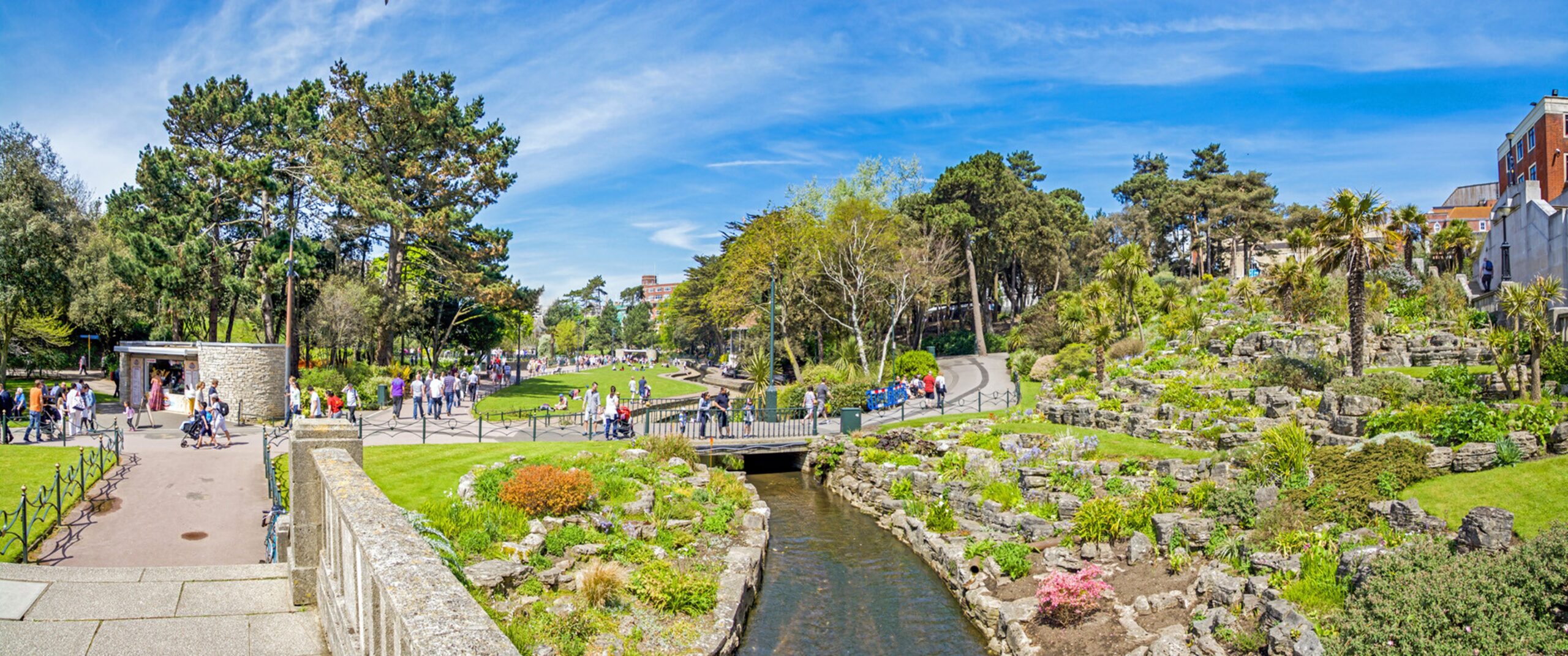
This is the case with the UK area comprised of Bournemouth, Christchurch and Poole (BCP) which has become the innovation focus in the south of the country, and has marked the way for other cities to follow in its footsteps.
Universities, companies and diversification
The pillars of the BCP Council are not so different to those seen in other regions of the world, the main exponents of which are Valley in San Francisco or Zhongguancun in Haidian: high quality of life, business prosperity and positive prospects for the future.
One of these pillars, and perhaps the most important in the region project, is the investment in universities, with Bournemouth University at the forefront. Industry also occupies a relevant position and has a considerable deployment and various plans in place that will increase productivity in the coming years, investing in 5G and industry 4.0. Finally, diversification in the region is notable and is helping to stabilize the economy:
- Financial services that compete with London
- Advanced manufacturing
- Engineering companies
- Focus on digital transformation
- Preservation of the care economy
- Promoting creativity
- Boosting tourism
- International education
From smart cities to smart regions

There are various concepts or factors that determine whether or not a municipality is smart, such as the economic model, urban management, citizen participation and open data, caring for the environment, quality of life or mobility options.
With a model based on economic diversification and high-value technologies, urban management policies with a clear corporate strategy established on values of environmental sustainability, innovation, connected communities and fulfilling lives, smart cities have proved that they look beyond megacities. It is what the BCP Council refers to as a ‘smart place‘.
This region’s smart place model consists in the “collaboration of digital technologies developed to provide solutions for a wide range of challenges such as healthcare, the environment and industry”, prioritizing the community above all.

Some of the problems they will tackle in terms of health will be empowering volunteers in the area, reducing the feeling of loneliness among some groups, tackling the lack of housing or preventing suicide. All noteworthy challenges.
Technology, the most visible aspect of smart cities
Technology (the application of science) has been, and is probably going to be, the spearhead of innovation in terms of smart cities. After all, social changes are possible once new technological applications reach the people.
In the case of the BCP Council, there has been a notable investment in cutting edge technology, without ignoring social aspects and closing any potential digital divides that may open. As the city council announced, “we are doing this because we believe that technology is a tool and it needs to develop thanks to real-life challenges that need addressing” always working for the community.
This vision, in turn, becomes an attraction for both families and for qualified individuals skilled in specific areas. Capturing and retaining talent in this way is key for smart cities of any size, given that a city is only as a smart as its population, industry or the companies that form part of it.
This can be seen in the BCP Council via the deployment of telecommunications and digital infrastructures, including the first Standalone private and neutral 5G network with the aim of testing several use cases in Social and Health care, Mobility and Industry 4.0 in the Lansdowne area.
Monitoring devices for electromagnetic fields (EMF) are installed in Lansdowne, to enable the level of non-ionizing radiation to be measured (ICNIRP, the one that does not interact with living matter), and the levels measured are uploaded to a website to let residents verify their compliance with the WHO guidelines.
Images | BCP Tourism