



Table of Contents
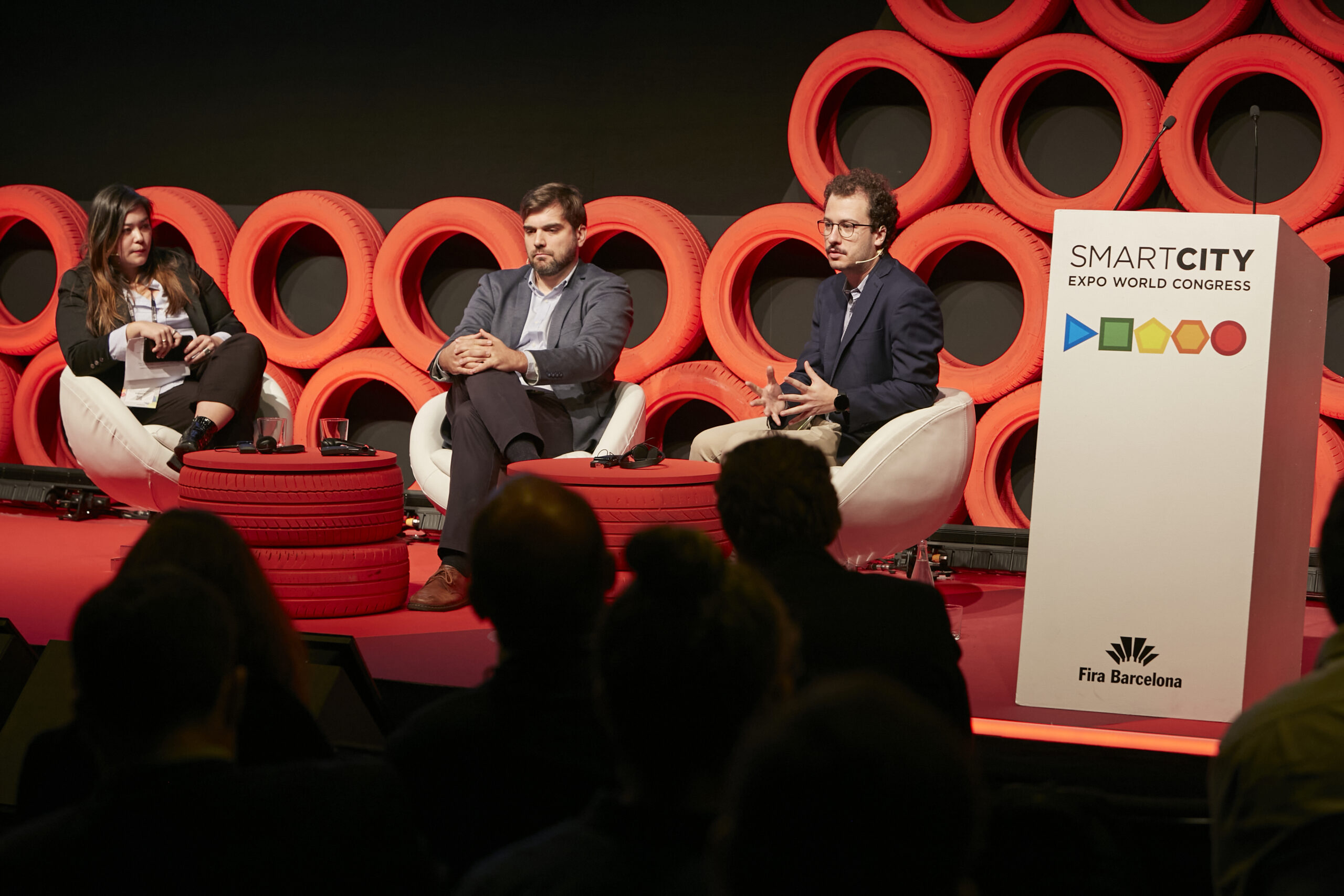
Author | Amaia PorteiroDigital transformation is radically changing our environment and our cities. Now that we have the appropriate tools, perhaps it is also time to reconsider the structural challenges of our city administrations and governments, in order to make them become more efficient, transparent and inclusive.45% of the world’s population lives in cities and the percentage will continue to increase in the coming decades. Our cities are smarter thanks to new digital tools, but are the administrations too?Now that we have the tools, there are no excuses for not making that change. It is just a case of finding a starting point. What exactly is needed to achieve a more agile and smarter government?During the Smart City Expo World Congress 2019 held in Barcelona, a panel focusing on the most innovative cities in this area revealed that all of their conclusions were similar. According to the panel members, smart cities of the future need to be:
- More agile. Able to adapt quickly. This includes working on lean budgeting for the low-scale and rapid implementation and testing of ideas under a fail fast approach.
- More transparent. Everyone must be given access to the data collected, so that all stakeholders can take part in the subsequent decision-making processes based on such data. Transparency will be crucial in order to regain the much-needed trust of citizens in their institutions and encourage their participation.
- More participatory. People must be at the centre of all the improvement strategies. Citizens must take an active role in the changes; they need to be heard and their requirements must be addressed.
- More inclusive. All sectors of society, including minority groups, must be represented when designing solutions to promote equity.
The future of citizen-focused governments: paperless and participatory
Aisha Bin Bishr, Director of Smart Dubai, presented the experience of the capital of the Emirates, which is close to achieving its objective of having a fully digital and paperless government by 2021. To achieve this, Bin Bishr explained that the processes of all the citizen journey services must be simplified and digitalised, more than 600 in the case of Dubai.It is also essential to integrate all sectors in decision-making processes: from the institutional and academic sectors, to the collaboration with the private sector and the representation of all groups of citizens (including the most disadvantaged sectors), as well as all the nationalities that live in a city. The aim is to generate an open dialogue between the community and the centre of urban power.Decision making must be as inclusive as possible. “Citizens must be aware of their importance and take over the decision-making process” -Rohey Malick Lowe, major of Banjul (Gambia), emphasized. In the case of her city, as with many others in Africa, the inclusion of the large rural population that has moved to the capital in development processes has been crucial, giving women a voice.If their contribution is to be genuine, citizens must not just be seen as mere “data generators”, instead, they must have suitable platforms and digital applications that enable their participation.In terms of the private sector, the experience of the city of Los Angeles, with its CleanTech Incubator and its IoT Consortium, suggests that the collaboration between companies and institutions should not translate into large projects, but small agreements that enable an agile and experimental approach. Companies should also get involved from the strategic planning stage and not just during the execution phase.Aisha Bin Bishr recommends not forgetting about start-ups. The Director of Smart Dubai commented that “most innovative solutions are provided by these”. Accordingly, the government of Dubai has established that at least 10% of the agreements between the municipal government and companies must be conducted with start-ups that propose improvements.
A change of scene: collaboration between cities
Traditionally, urban development and planning was defined by the framework designed by each country’s central government. Smart cities are giving way to a revolutionary change of model: the creation of inter-citizen and supra-national collaborative structures. This means the experience and knowledge of each city can be shared with other cities on their network, regardless of whether or not they belong to the same country.Another advantage for cities with small budgets is that each member of this collaborative network can test a specific aspect of urban planning, working by niches in order to subsequently share the data, conclusions and solutions implemented among all of them. This system can create tension with more centralist state governments, such as Banjul, but it offers unquestionable advantages for the urban development of small and medium-sized cities.In short, shared knowledge together with digital technology will be crucial for a more agile, efficient and economic development of smart cities in the coming years.Images | ZQ Lee, Goh Rhy Yan