



Table of Contents
Author | Jaime Ramos
Birth rates and the demographic effects of the same have a crucial impact on our current lifestyle model. Cities are active settings that come up against and tackle numerous associated challenges, such as the presence or not of children and ageing. In fact, some experts are also contemplating whether we are heading towards cities without children.
The global drop in birth rates
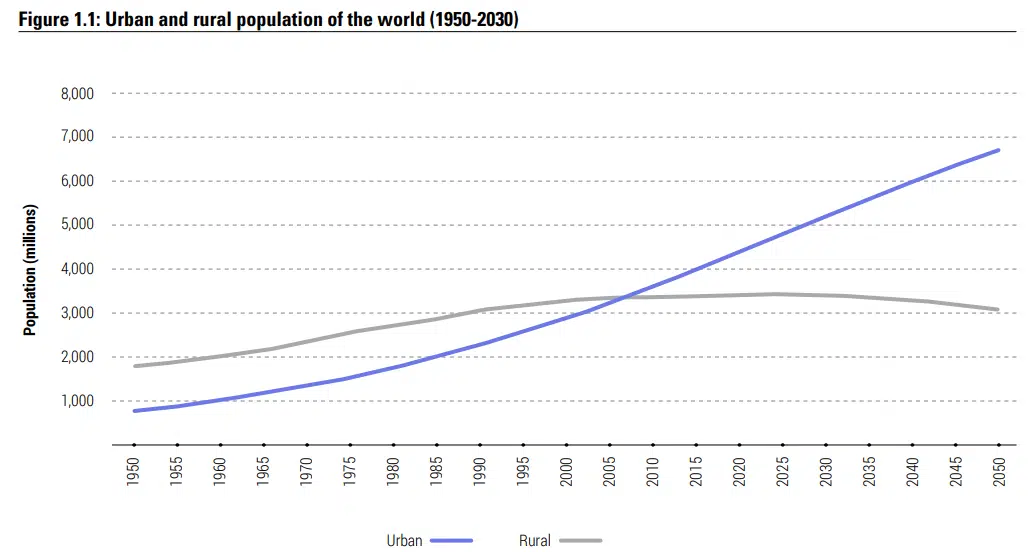
Overpopulation has been threatening us for decades. Although it is not the only variable, this demographic situation has become a decisive agent in the drop in birth rates. The first world phenomenon has gradually spread to other regions.
The U.S. birth rate has dropped by 19% since 2007. In China, the authorities have changed their policy and now allow families to have up to three children. According to its population census, the country has a negative population growth, losing roughly 400,000 people every year. At the end of the century, the World Economic Forum estimate is that it will lose between 600 and 700 million, i.e., half its population.
South Korea, Japan, Italy and Spain head the list of large nations with the fewest births, standing at around seven per one thousand inhabitants. The phenomenon is even more intense in cities.
Why are birth rates declining?
It is undeniable that our species is facing a demographic transition. Interestingly, the structural reasons are more common in urban areas. On the one hand, fertility increases at the same rate as its associated problems. However, the number people voluntarily choosing not to have children or voluntary childlessness is increasing too.
What is the childfree movement?
These terms refer to people who do not wish to have children; and in general, all organizations that support non-procreation.
This trend has led to numerous debates in recent years by those who question the excesses of its legitimacy (such as encouraging hatred and discrimination against children, in contrast to many defenders, who argue that procreation is a classic social alienation instrument. The COVID-19 crisis, apart from accelerating the drop in birth rates, accentuated this form of divisiveness.
Whatever the case, an increasing number of people do not wish to have children. This group has led to the escalation of another urban trend that we have been experiencing for decades. The segregation of urban areas based on the population type. Childfree groups tend to be drawn towards metropolitan areas.
Towards cities with fewer children
The intentions of those who do not want to have children is having a significant impact on birth rates and on cities. It is estimated that, if declining birth rates continue as they are now, the population of Manhattan will drop by half in just 30 years. The conflict between freedom and necessity is nearing. Many urban centers are greatly concerned with reversing birth rates. These include Singapore or Japan. There, the authorities consider it to be a demographic crisis and they fear significant economic effects.
The fear of living in cities without children comes with the uncertain sustainability of public services with an ageing population. However, at a micro level, experts are not so sure that it poses psychological challenges or wellbeing and/or loneliness issues for childless seniors.
Nevertheless, these trends must not be confused with due child protection. Although urban extinction may be a threat to them, children have an immeasurable positive value for cities.
Images | Freepik/freepik and Freepik/rawpixel.com