



Table of Contents
Author | David Bravo
Since the start of 2020, the COVID-19 pandemic has transformed the lives of people around the world. Social distancing, new hygiene routines, reduced gatherings and partial or total confinements have been some of the measures adopted by governments to prevent the spread of the virus.
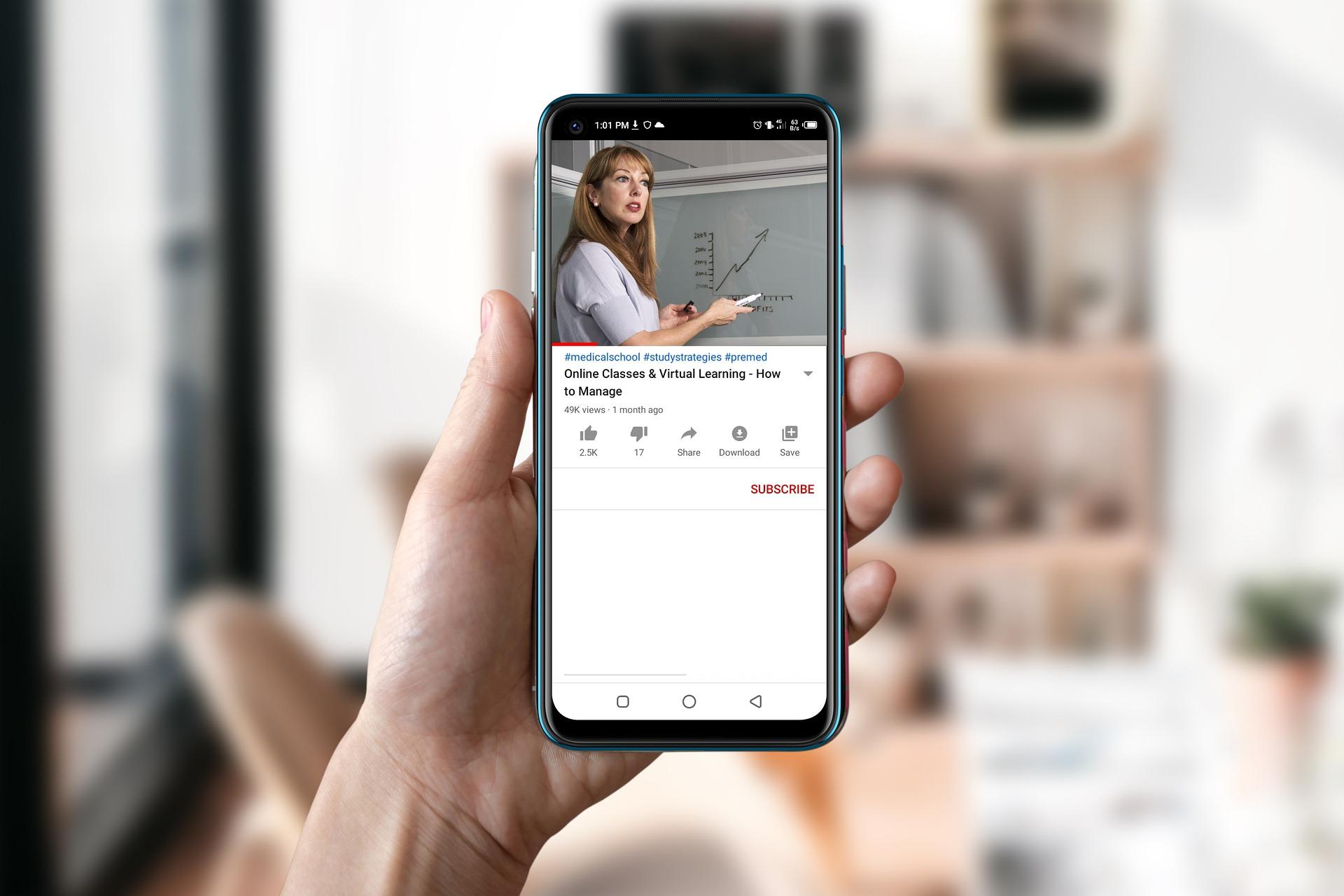
In turn, these precautions have forced decisions to be made in order to continue with activities such as healthcare, economic activity and educational obligations. Therefore, thanks to the internet and mobile phones, medical teleconsultations, telecommuting or remote learning have all been possible. Services that had been tested for some time, but which were urgently implemented in areas in which they were not greatly developed.

Although virtual campuses had been functioning in higher education for years, with varying degrees of complexity —from making literature on a given subject available to students, to video conference tutorials or classes—, the pandemic has forced that virtual education to be extended to practically all levels of education.
According to latest data by UNESCO, around 160 million children have seen their schools close their doors due to COVID-19, 214 million —one in seven— have lost more than three quarters of their classroom-based education and over 888 million are still experiencing interruptions in their education. Even when virtual classes have been introduced, the quality of the teaching has not always been the best.
Income and lack of feedback are the biggest challenges

As Lucía Mendoza Castillo, from the National Autonomous University of Mexico points out, “classroom-based education and virtual education are not the same. People think they are the same as it is education, but that is not correct”.
According to Mendoza, although in both classroom-based teaching and in virtual teaching, teachers must have a lesson plan that takes into account the subject to be taught and the time available to do so, when it comes to applying that syllabus, the mechanism is different in each case. The main difference is that in classroom-based education, that syllabus can be changed in real time, based on the response of the students to the explanations, since it is simple to identify whether or not the content is being understood.
In virtual lessons, the relationship between the teacher and the student is not so fluent and there are other conditioning factors that make it harder, such as, the level of income of the families and their capacity to access the technological equipment .
Although many schools have textbook banks —based on a circular economy policy, or because some students cannot buy new books each year—, a similar system has not been created yet for technological devices or internet connections with unlimited data.
Estonia may be showing the way

The pandemic has also revealed that, even families with sufficient resources to access that technology, have found it hard to strike a balance between the adults’ telecommuting time with the children’s online classes, since there were not enough devices in the household for everyone.
To solve these types of problems concerning virtual education, it would be wise to look at policies such as those implemented in Estonia.
At the end of the 1990s, the Baltic country started a process to transform its education system in order to adapt it to new technologies, which made its ranking in the PISA report improve significantly. Apart from creating materials expressly designed for online education, it launched programs to train teachers in new technologies; it provided students with a computer connected to the internet and it recognized Internet access as a citizen’s legal right.
The Estonia case, a developed and technologically cutting-edge country, may not be exportable to the rest of the world, but its experience may be extremely valuable when implementing policies in a faster and more effective manner.
Photos | mohamed_hassan, AmrThele, aktechkpp2019, jagritparajuli99